

The Wardens do not conquer. They do not threaten. They simply make the noise of being human quieter — until there is nothing left to resist.
Synopsis
Mara Keene spent her life listening for a signal from the stars. She never expected the universe to answer by offering to erase her.
In the Atacama Desert, her team discovers a vast lattice structure that intensifies the longer it is observed. The more people look, the more stable it becomes. The more they agree on its meaning, the deeper it takes hold.
The world calls it the Wardens. What the Wardens offer is not salvation. It is subtraction.
A beautiful, spreading silence that removes anxiety, grief, and the messy particularities of the self. People stop fighting it. Governments try to manage it. And those who keep watching begin to disappear into the calm.
Trapped in a remote observatory under increasing pressure, Mara understands the truth too late: the Wardens have not come to conquer. They have come to solve the human problem by making it quieter.
To resist means protecting the very pain the rest of the world is learning to forget. To surrender means becoming someone who no longer remembers why it mattered.
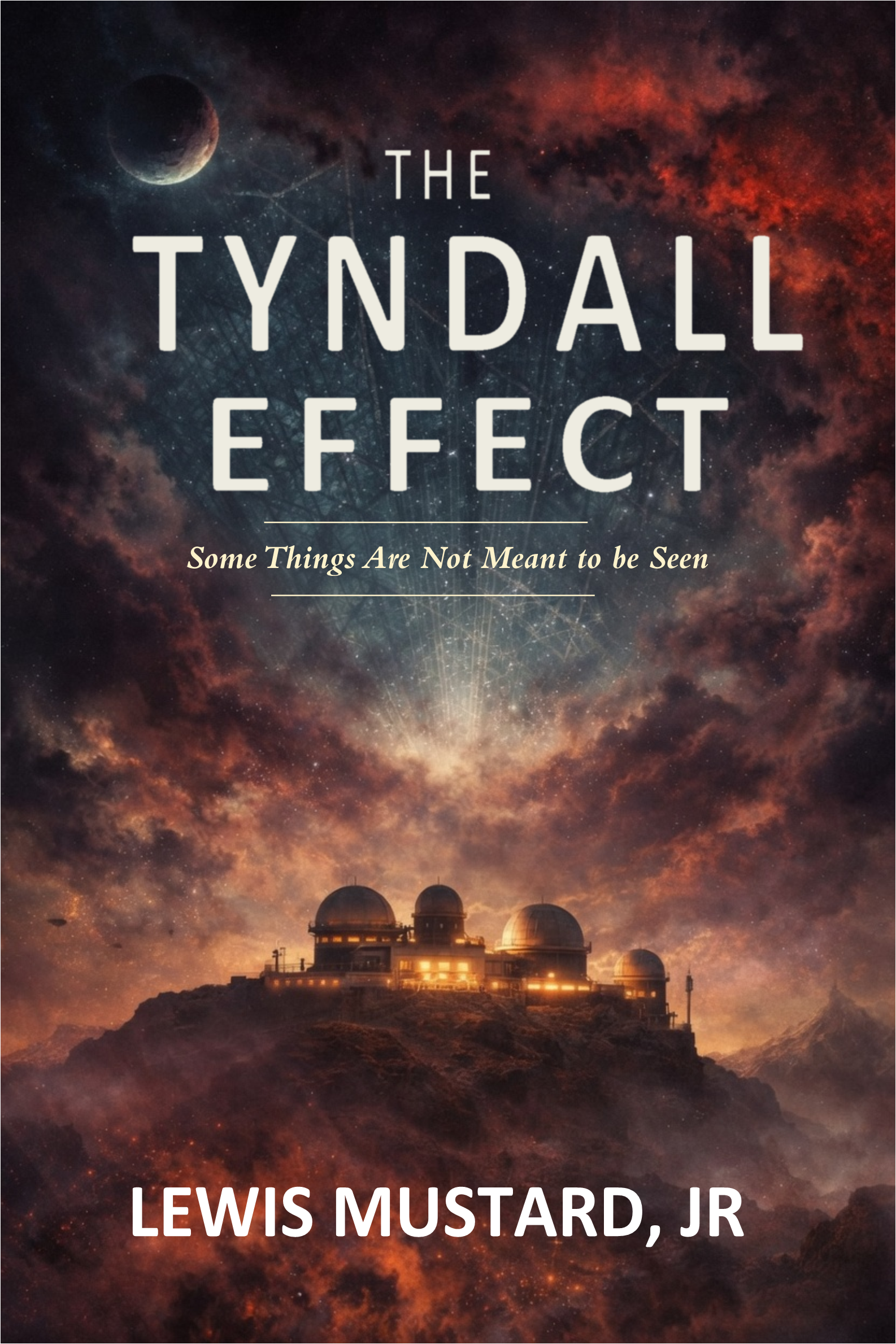
Thought-provoking sci-fi thriller that stays with you long after the final page with its tension and unsettling ideas about identity.
Deeply unsettling and impossible to shake.
Excerpt from Chapter 1
The cross-check pinged. Lena's chair creaked.
"They see it too," she said. "Identical structure, identical coordinates."
Julian's face went slack. "No way."
Ravi let out a low whistle and looked at Mara. "You want to call it?"
Mara shook her head, numb. "Run it against the Harvard archive. If it's real, it'll show up there too."
Lena nodded, already spooling up the comparison. "That'll take a while."
Mara sagged, every muscle suddenly too heavy. She looked out the window at the faintest rim of dawn on the horizon. The sky was empty, but she could feel the thing in the data, enormous and silent, pressing up against the edge of knowing.
Her phone buzzed. The caller ID glowed blue: Adrian.
She stepped into the corridor, the cold stone floor biting through her socks, and pressed accept.
The line hissed. Then Adrian's voice arrived, low and tired.
"You were supposed to call four hours ago."
Mara closed her eyes. In her head she could hear the specific drip of the kitchen faucet in Seattle—a small, insistent problem she'd promised to fix seven months ago.
"The sink is leaking again," Adrian said.
The sentence stopped her more effectively than anger would have.
"I can call someone from here," she said. "I have the service account saved."
"I don't want a plumber."
"Then what do you want me to do from Chile?"
The question came out sharper than she intended. When he answered, the tiredness in his voice had changed shape.
"I want to know where the towels are. The good ones. The ones we bought in Portland. I want to know why I'm using the roasting pan your mother gave us to catch water under the sink. I found your dry cleaning from August. It's still in the plastic. It's been there so long the dust is part of the suit now."
Mara gripped the edge of the server rack. The metal was cold enough to hurt.
The roasting pan did it. Not the leak. Not the accusation. The roasting pan. She saw it under the sink, absurd and domestic, catching gray water in small metallic taps. It was a thing meant for Thanksgiving, for garlic and potatoes and a bird too large for the two of them. Now it was measuring the failure of their life together one drop at a time.
"Adrian," she said, "this is not a normal night."
"There's never a normal night. That's the problem. It's always some crisis up there, and in between there's just… nothing. Just the space where you were supposed to be."
A new line, impossibly straight, pulsed across Lena's display. Julian's voice cut through the hum, sharp with alarm. "Mara!"
She turned slightly away from him.
"I know I missed the call," she said. "I know I keep doing this. But something is happening here that might change everything we understand about—"
"I got the fellowship," Adrian said.
Geneva. One year. Maybe longer. They wanted him to lead the seminar on subjective truth.
"That's wonderful," Mara said. She meant it, and the sincerity landed like a shard of glass in her own throat.
"Come home for one week," he said. "No laptops. No remote calls. No checking the sky while I make dinner. One week to see whether there is anything left of us that isn't conducted through a screen."
Mara looked at the monitor wall.
Then he said, "You already left, didn't you?"
"I am standing here."
"No. You went back into that room the second the alarm started. I can hear it in the way you're not breathing."
"I can't leave the team. Not now."
"Can't or won't?"
The old question. The honest one.
"If I walk away now," she said, "I may miss the first stable reconstruction of a structure three hundred light years across. I may miss the moment we learn whether this is local, physical, artificial, or something we do not have language for. This is why I am here."
"And what am I?" Adrian asked.
She had no answer that did not sound like proof.
"Goodnight, Mara," he said. "I hope it's enough to fill the room."
The line clicked dead.
She kept the phone to her ear for one more second, but only the alarm filled the space where his voice had been. The room behind her burned blue. She lowered the phone, pocketed it, and crossed back to the console.
The team was silent, watching her. Mara looked past them, to the structure on the screen, its lines clean and absolute. It was the most beautiful, terrible thing she had ever seen.
And she had just chosen it.
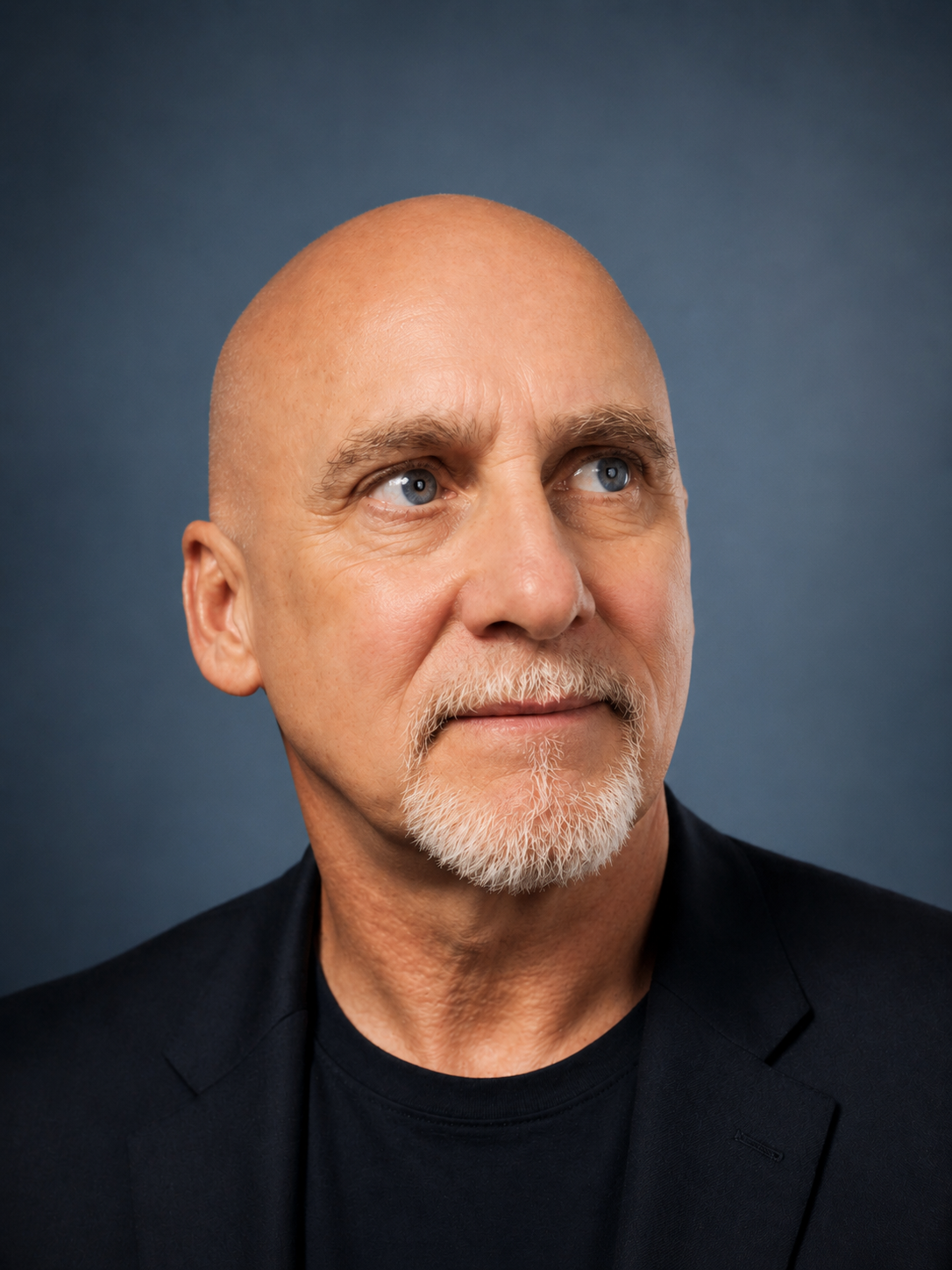
The Author
Lewis Mustard, Jr.
Lewis Mustard writes speculative fiction at the intersection of science and the human heart. His work explores the quiet terror of observation, the cost of perfect peace, and the courage it takes to remain broken in a world that wants to smooth every edge.
The Tyndall Effect, his debut novel, follows astronomer Mara Keene as she confronts a celestial presence offering humanity a seductive form of silence — one that erases anxiety, grief, and the jagged pieces of the self. Perfect for readers who love the high-concept tension of Dark Matter and the atmospheric dread of Arrival.
When he's not writing about anomalies that notice us back, Lewis can be found thinking about dust fields, late-night observatories, and the strange mercy of remaining human.
Transmission incoming
Join the mission.
Be first to know — updates, events, and transmissions from the edge.